Gardening for Beginners: How to Grow Your Green Thumb This Spring
Gardening is less about perfection and more about consistency. Start small, check your plants daily, and enjoy the process.
If you’re also preparing your home for spring, you may find this helpful:
👉 Outdoor Gear Check: What to Replace or Repair Before Spring Hits

Starting a garden often feels much more intimidating than it actually is. Many beginners make the same mistake: they assume they need a sprawling backyard, expensive power tools, or a PhD in botany to see results. The truth is much simpler. A successful garden doesn’t require perfection—it requires a simple plan, a few healthy plants, and a bit of consistency.
Whether you have a massive sunny lawn or a small apartment balcony, gardening is one of the most rewarding hobbies you can start this season. Beyond the fresh food, it’s a proven way to lower stress, beautify your home, and even add a bit of curb appeal to your outdoor living spaces.
Here is your no-fail guide to getting started.
1. Location, Location, Location
In real estate and in gardening, location is everything.
Most vegetables, herbs, and flowers crave six to eight hours of direct sunlight every day. Before you buy a single bag of soil, spend a weekend tracking the sun across your yard, porch, or patio.
If you don’t have much space, don’t let that stop you.
Containers, raised beds, and vertical planters all work beautifully. In fact, many beginners find smaller spaces easier to manage because they require less weeding and are easier to monitor.
A balcony herb garden can be just as productive as a large backyard plot when it’s placed in the right sunlight.
2. Don’t Treat Your Soil Like Dirt
Healthy plants start underground.
If you are planting directly into the ground, loosen the soil and mix in high-quality compost or garden soil. This adds nutrients and improves drainage so plants can develop strong roots.
For container gardening, there is an important rule:
Never use yard dirt in containers.
Regular soil is too heavy and compacts easily, which blocks oxygen and water flow. Instead, use a lightweight potting mix designed specifically for container plants.
Good soil may feel like a small detail, but it is often the difference between thriving plants and struggling ones.

3. Stick to the “Easy Wins”
Many new gardeners try to plant too much in their first season.
Instead, focus on a few plants that are known to be hardy and beginner-friendly.
A garden with five thriving plants is far more rewarding than one with twenty struggling ones.
Easy Vegetables
-
Lettuce
-
Cherry tomatoes
-
Zucchini
-
Green beans
Easy Herbs
-
Basil
-
Mint
-
Parsley
-
Chives
Easy Flowers
-
Sunflowers
-
Marigolds
-
Zinnias
These plants grow quickly, tolerate minor mistakes, and provide visible results that keep beginners motivated.
4. Master the “Deep Soak”
Watering can feel confusing at first, but the basic idea is simple:
Plants prefer deep watering less often rather than light watering every day.
A deep soak two or three times per week encourages roots to grow deeper into the soil, making plants stronger and more drought-resistant.
Try to water in the early morning whenever possible. This allows moisture to soak into the soil before the sun evaporates it.
Another benefit: leaves have time to dry before evening, which reduces the risk of fungus and mold.
5. Give Plants Room to Breathe
One of the most common beginner mistakes is planting everything too close together.
When plants are crowded:
-
airflow decreases
-
moisture stays trapped
-
pests and disease spread faster
Always follow the spacing recommendations on seed packets or plant tags.
Your garden may look sparse at first, but within a few weeks the plants will grow into the space naturally.
Healthy airflow means healthier plants and bigger harvests.

6. The Five-Minute Garden Rule
You don’t need to spend hours gardening every day.
Instead, follow the Five-Minute Rule.
Spend a few minutes each morning or evening walking through your garden.
Look for:
-
yellow leaves
-
holes from insects
-
dry soil
-
weeds beginning to sprout
Catching a small problem early prevents larger issues later.
A quick daily check is often the easiest way to keep your garden thriving.
The Golden Rule: Embrace Imperfection
Here’s something experienced gardeners rarely admit publicly:
Every gardener kills plants.
Sometimes pests win. Sometimes the weather refuses to cooperate. And sometimes a plant simply fails for no obvious reason.
That’s normal.
Gardening is not about perfection. It is about learning by doing.
Start small. Observe what works. Adjust next season.
That is exactly how beginners become experienced gardeners.

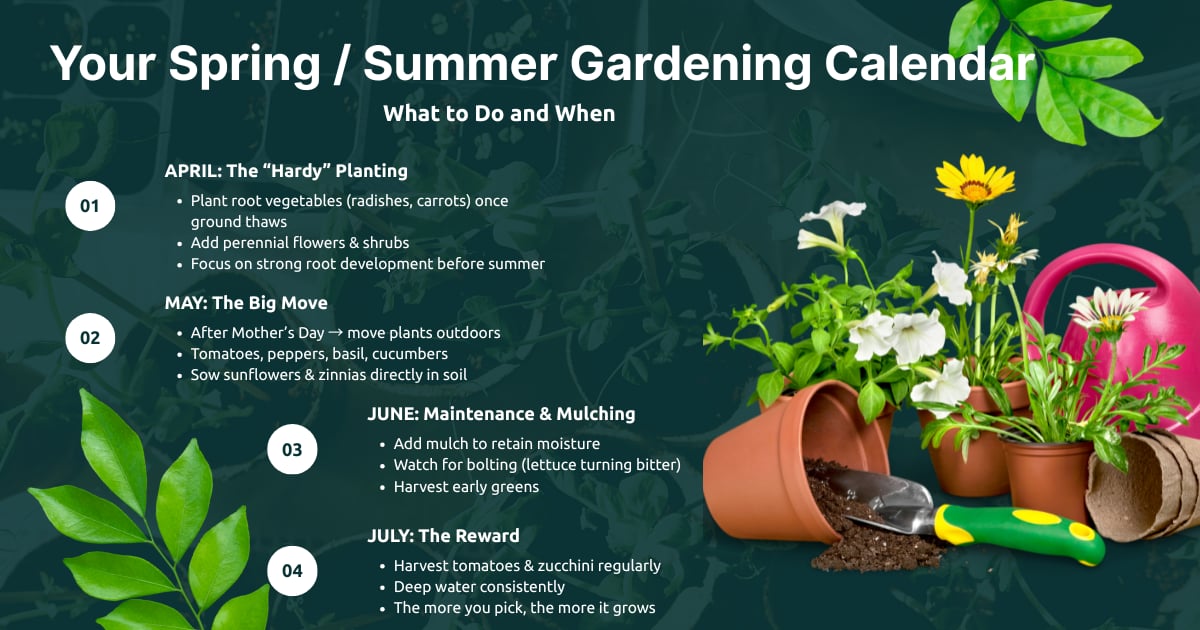
Your Spring & Summer Gardening Calendar
To help keep things simple, here’s a quick seasonal timeline for beginner gardeners.
April: Hardy Planting
Once the ground is workable, plant cold-tolerant crops like:
-
radishes
-
carrots
-
peas
It’s also a great time to plant perennial flowers and shrubs so they establish roots before summer heat arrives.
May: The Big Move
In many parts of New York, Mother’s Day marks the safe planting zone for warm-weather plants.
Move outdoors:
-
tomatoes
-
peppers
-
cucumbers
-
basil
You can also plant sunflowers and zinnias directly in the garden.
June: Maintenance Mode
As temperatures rise:
-
add mulch to retain moisture
-
watch for weeds
-
harvest early greens
Mulch is one of the easiest ways to keep plants healthy during warmer months.
July: The Reward
This is when the payoff begins.
Tomatoes, zucchini, herbs, and flowers will start producing heavily.
Keep watering deeply and harvest regularly. Many plants will produce more when you pick frequently.

Why Gardening Adds Value to Your Home
Beyond the personal rewards, gardening also improves outdoor appeal.
A simple herb garden, raised bed, or flower border can make a home feel:
-
more welcoming
-
more maintained
-
more visually appealing
These small details matter if you’re ever preparing a property for sale.
If you’re thinking about improving your outdoor space before listing, you may also find this guide helpful:
👉 Internal Resource: https://robsoldmyhouse.com/outdoor-gear-check-before-spring
Small improvements often create a big impression for buyers.
Stay Connected with Team Taylor
📺 YouTube: @teamtayloratkellerwilliams5814
📘 Facebook: Robert L. Taylor Realtor
📸 Instagram: @robsoldmyhouse
🌐 Website: RobSoldMyHouse.com