Game, Set, Start: A Beginner’s Guide to Tennis
Each summer, the US Open brings tennis into the spotlight as the world’s best players compete in New York. The excitement of the tournament can inspire people of all ages to pick up a racket and try the sport for themselves.
Professional tennis may look fast, technical, and intimidating, but beginners do not need a powerful serve, expensive equipment, or years of lessons to enjoy playing. All you really need is a racket, a few tennis balls, a court, and someone willing to learn with you.
Start With the Basic Equipment
Beginners do not need professional-level gear.
Your starter checklist:
A comfortable tennis racket
A can of tennis balls
Supportive athletic shoes
Comfortable clothing
Water and sunscreen
A partner or practice wall
Choose a racket that feels comfortable rather than buying the heaviest or most expensive option. Some sporting-goods stores and tennis facilities also offer rentals or demo rackets.
Try this: Hold the racket and swing it gently several times. If your wrist or arm feels strained, look for a lighter option.
Learn the Court
A tennis court has several lines, but beginners only need to understand the basics.
The baseline runs across the back of the court. The service line is closer to the net, and the two service boxes are where serves must land. The inner sidelines are used for singles, while the outer sidelines are used for doubles.
Court challenge: Before playing, identify:
The baseline
The singles sidelines
The doubles sidelines
The service boxes
The center mark
Learning the court before you start makes the game much easier to follow.
Keep the Scoring Simple
Tennis scoring can sound confusing because zero is called “love,” followed by 15, 30, and 40. After 40, the next point usually wins the game. At 40–40, the score is called deuce, and one player must win two consecutive points.
Do not let scoring stop you from playing.
We suggest: During your first few outings, skip traditional scoring. Count each point normally and play until someone reaches 10. Once you feel more comfortable, introduce standard tennis scoring.
Focus on Control, Not Power
Professional players make powerful shots look exciting, but beginners benefit more from keeping the ball in play.
Start closer to the net near the service line instead of standing at the baseline. Gently hit the ball back and forth.
Rally challenge:
Can you hit the ball three times without missing?
Can you reach five?
Can you eventually reach 10?
Focus on cooperation rather than competition. Longer rallies help improve timing, control, and confidence.
Practice Three Basic Skills
You do not need to master every tennis stroke immediately. Start with three essentials.
Forehand: Hit the ball on the dominant side of your body.
Backhand: Hit the ball from the opposite side using one or both hands.
Serve: Start each point by hitting the ball diagonally into the opposite service box. Players receive two chances to complete a legal serve.
Try this: Practice each skill for five minutes instead of spending an entire session on one stroke. Short practice periods can feel less frustrating and keep the game enjoyable.
Play With Other Beginners
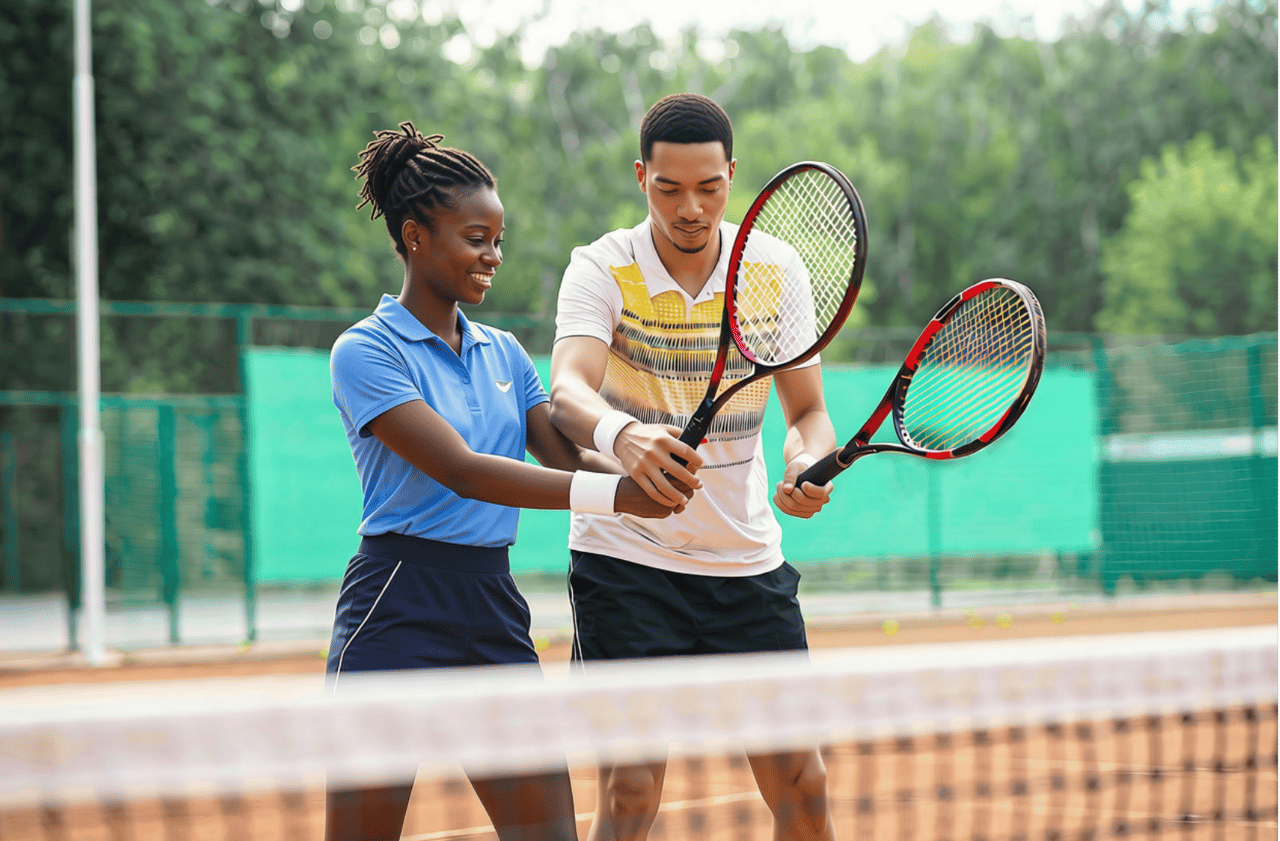
Learning with another beginner removes pressure. You can laugh at mistakes, shorten the court, and simplify the rules.
Doubles can also be a good starting point because four players share the court, reducing how much ground each person must cover.
Conversation starter: Ask a friend, neighbor, or family member to join you for a 30-minute tennis session. Keeping the first outing short makes it easier for both of you to try.
Watch the US Open Differently
While watching the US Open, pay attention to more than powerful serves and winning shots.
Choose one player and observe:
Where they stand when returning serve
How they recover after each shot
How often they choose control over power
How they respond after mistakes
How they adjust their strategy
You may never hit like a professional, but you can learn from their positioning, patience, and preparation.
Get Out and Try It
Your first tennis session does not need to look like a real match. Spend 20 or 30 minutes hitting the ball, moving around the court, and getting comfortable with the racket.
The goal is not immediate excellence. It is finding an enjoyable way to stay active, spend time outside, and possibly discover a sport you can continue playing for years.
Your August challenge: Find a local court, invite someone to join you, and complete one beginner tennis session before the US Open finals.
You may discover that tennis is much easier to begin than it appears from the stands.