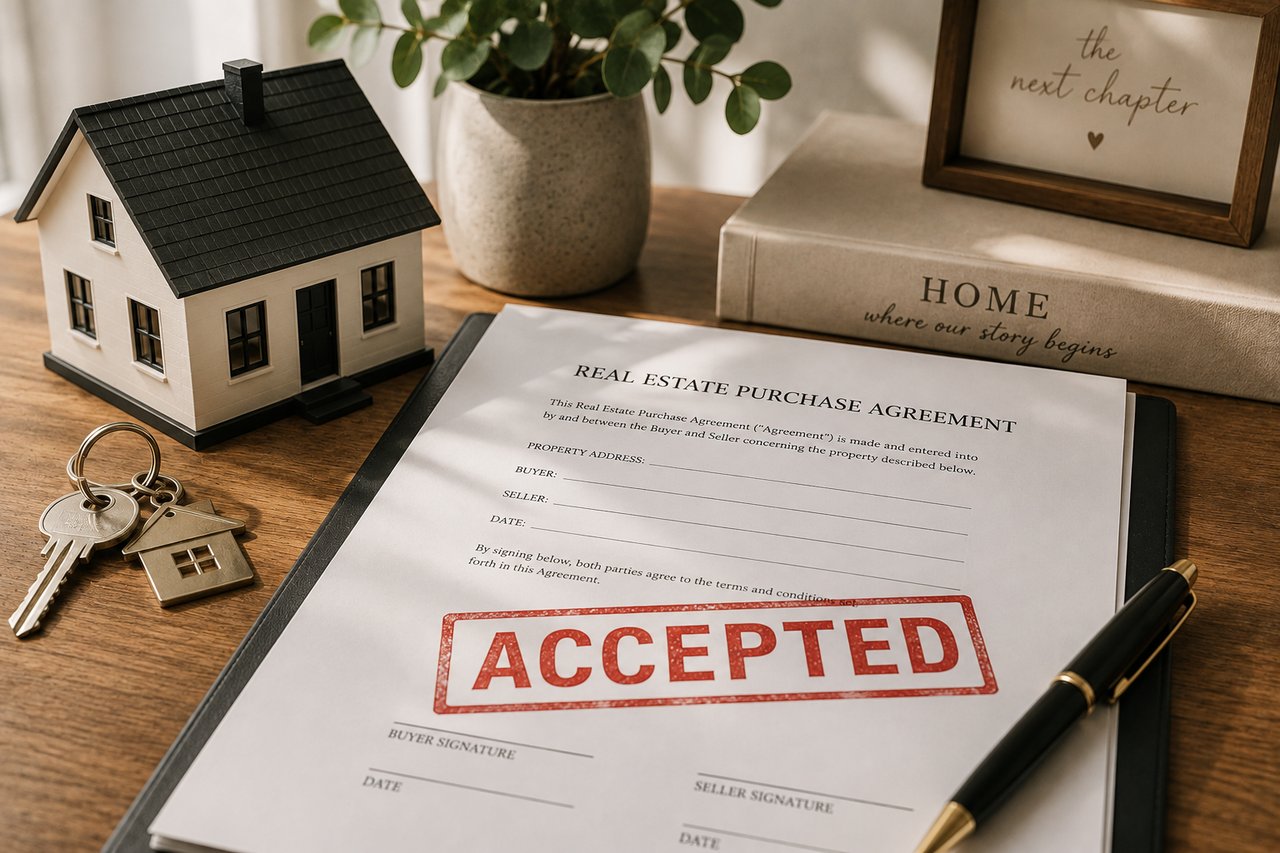
🏡 What Happens After Your Offer Is Accepted? A Buyer’s Guide to the Next Steps
Getting your offer accepted is exciting. 🎉
After searching online, touring homes, comparing properties, talking through your options, and finally deciding to make an offer, hearing those words — “The seller accepted your offer” — can feel like a huge relief.
You found the home. You made the offer. They said yes.
But there is an important thing every buyer should understand:
An accepted offer is not the finish line. It is the beginning of the next phase of the home-buying process.
From attorney review and inspections to financing, appraisal, title work, and the final walk-through, there are still several important steps before you officially become the homeowner.
Some steps may move quickly. Others can take time. And occasionally, unexpected issues can come up.
The good news? You do not have to navigate the process alone.
Here is what buyers should generally expect after their offer is accepted. 👇
⚖️ 1. Attorney Review and Contract Details
In New York, the period after an offer is accepted typically involves the attorneys preparing, reviewing, and negotiating the formal contract.
Your attorney and the seller’s attorney will review the terms of the transaction and address any necessary changes or questions before the contract is finalized.
This is an important stage because the accepted offer is not the same thing as a fully executed contract.
During this time, stay in communication with your real estate agent and attorney.
If you have questions about the contract, contingencies, deadlines, deposits, inspections, or other terms, ask them.
There may be some back-and-forth between the attorneys, and that is normal.
The goal is to make sure everyone understands the agreement and the transaction can move forward with clear expectations.

🔍 2. Schedule Your Home Inspection
For many buyers, the home inspection is one of the first major steps after an offer is accepted.
An inspection gives you a closer look at the property’s condition and can help identify potential concerns that may not have been obvious during a showing.
Depending on the property, an inspector may review areas such as:
- 🏠 Roof
- 🧱 Foundation
- 🔥 Heating and cooling systems
- 💧 Plumbing
- ⚡ Electrical systems
- 🌬️ Attic and ventilation
- 🪟 Windows and doors
- 🚪 Exterior components
- 🧰 Visible structural and mechanical components
The purpose of an inspection is not to find a perfect house.
No home is perfect.
The goal is to better understand what you are buying.
Some findings may simply be normal maintenance items. Others may be more significant and require further discussion.
If concerns come up, your real estate agent and attorney can help you understand your options based on the terms of your agreement.
🏦 3. Stay Closely Connected With Your Lender
If you are financing your purchase, your lender becomes a major part of the process once your offer is accepted.
Even if you already have a pre-approval, the lender will typically need additional documentation and information to continue processing the loan.
You may be asked for:
- Pay stubs
- Bank statements
- Tax documents
- Employment information
- Asset documentation
- Updated financial records
- Other information required for underwriting
📌 Responding quickly matters.
A delay in providing documents can potentially slow down the mortgage process and affect the closing timeline.
This is also a time to be especially careful about making major financial changes.
Before you:
- Open a new credit card
- Finance a vehicle
- Make a large purchase
- Change jobs
- Move large amounts of money
- Take on additional debt
Talk to your lender first.
Even something that seems unrelated to your home purchase can potentially affect your mortgage approval.

📊 4. The Appraisal
If you are using a mortgage, the lender will typically order an appraisal.
The appraisal helps the lender determine whether the property’s value supports the purchase price.
The appraiser will generally consider the home’s characteristics and compare it with relevant recent sales.
If the appraisal supports the purchase price, the transaction can continue moving forward.
If the appraisal comes in below the purchase price, additional conversations may be necessary between the buyer, seller, agents, attorneys, and lender.
The exact options available will depend on the terms of your agreement and the circumstances of the transaction.
An appraisal does not guarantee that there will never be an issue with the property’s value, but it is an important part of the financing process.
📜 5. Title Work and Legal Review
While you are thinking about inspections and financing, there is also important work happening behind the scenes.
The attorneys and title professionals will work on the title process to help determine whether there are issues that need to be addressed before ownership can transfer.
This may involve reviewing things such as:
- Liens
- Judgments
- Property taxes
- Ownership records
- Legal descriptions
- Property boundaries
- Other title-related matters
Most buyers will not see every detail of this process, and that is okay.
The important thing is that your legal and title professionals are working to identify and resolve issues that could interfere with the transfer of ownership.

🛡️ 6. Arrange Homeowners Insurance
Another important step is getting homeowners insurance in place.
Your lender will generally require proof of insurance before the mortgage can be finalized.
It is smart to start this process early rather than waiting until right before closing.
Insurance costs can vary depending on factors such as:
- Location
- Age of the home
- Roof
- Heating and cooling systems
- Property condition
- Coverage levels
- Property features
If the home has something unique — such as a pool, wood stove, older systems, or other special features — make sure you discuss those details with your insurance provider.
Getting this handled early can help prevent unnecessary last-minute delays.
✅ 7. Final Loan Approval
As your closing gets closer, your lender will continue reviewing the transaction.
This can involve the appraisal, title information, insurance, financial documentation, employment information, credit information, and other requirements.
Eventually, the goal is to receive final approval and move toward being clear to close.
Until your lender confirms that everything is finalized, continue treating your finances carefully.
That means avoiding unnecessary major purchases or financial changes and responding promptly when your lender requests information.
You are getting close — but it is not over until it is over.

📦 8. Start Planning Your Move
While the professionals are handling the legal and financial side of the transaction, you can start preparing for the practical side of becoming a homeowner.
Think about:
- 📦 Packing
- 🚚 Movers
- 💡 Utilities
- 🌐 Internet
- 📬 Mail forwarding
- 🏫 School or work transitions
- 🛋️ Furniture deliveries
- 🧹 Cleaning
- 🔑 Key arrangements
- 📍 Address changes
One important reminder:
Stay flexible.
Until your closing date is confirmed by the appropriate professionals, avoid scheduling everything down to the minute.
Real estate transactions involve multiple moving parts, and sometimes timelines change for reasons outside the buyer’s control.
A little flexibility can save you a lot of stress.
🚶 9. The Final Walk-Through
Before closing, buyers will typically have an opportunity for a final walk-through.
This is your chance to make sure the property is in the condition you expect based on the agreement.
You may want to confirm that:
- The property is substantially in the expected condition.
- Agreed-upon repairs have been completed, if applicable.
- Included appliances or other agreed-upon items are still present.
- The seller's belongings have been removed as required.
- There are no obvious new issues that were not previously present.
The final walk-through is not a replacement for a home inspection.
Think of it as your final opportunity to look at the property before ownership officially changes hands.

✍️ 10. Closing Day
And then comes the day you have been waiting for. 🎉🏡
Closing day.
The buyer signs the necessary documents, the seller completes their paperwork, funds are handled, and the transaction moves toward the official transfer of ownership.
Once the closing is complete and the transaction has been properly finalized, you get the keys to your new home. 🔑
The exact closing process can vary depending on the transaction, lender, attorneys, title professionals, and other circumstances.
Your real estate and legal team should help you understand where you need to be, what you need to bring, and what to expect.
For many buyers, closing day is when everything finally becomes real.
You are no longer just looking at listings.
You are officially becoming a homeowner.
🧠 The Process May Feel Like a Lot — And That Is Normal
One of the biggest mistakes first-time buyers can make is thinking they should automatically understand every step of the process.
You do not.
There are contracts, attorneys, inspections, lenders, appraisals, title work, insurance, deadlines, paperwork, and plenty of terminology that can feel overwhelming.
That is why having the right professionals around you matters.
Your real estate agent can help you understand the overall process and keep the transaction moving.
Your attorney handles the legal side.
Your lender handles the financing.
Your inspector helps you understand the property's condition.
Your insurance professional helps you protect your investment.
Everyone has a different role, and having those pieces working together can make the journey much smoother.
🚨 What If Something Goes Wrong?
It is also worth remembering that not every transaction goes perfectly.
An inspection may uncover an unexpected issue.
An appraisal may create questions.
The lender may request additional documentation.
A title issue may need to be resolved.
A repair may take longer than expected.
That does not automatically mean the transaction is falling apart.
The important thing is to communicate quickly and let the appropriate professionals help you understand the situation.
Avoid making major decisions based on panic or assumptions.
Ask questions, understand your options, and work with your team to determine the best path forward.
🏡 The Bottom Line
Getting your offer accepted is a huge milestone, but there are still several important steps between “accepted offer” and “welcome home.”
⚖️ Attorney review
🔍 Home inspection
🏦 Financing
📊 Appraisal
📜 Title work
🛡️ Homeowners insurance
✅ Final loan approval
📦 Moving preparations
🚶 Final walk-through
✍️ Closing
Knowing what comes next can make the process feel much less intimidating.
At Team Taylor at KW Platform, we help buyers throughout the Capital Region understand the home-buying process, stay organized, and move toward closing with confidence.
Buying a home is a big decision.
But you do not have to figure it all out on your own.
Your offer was accepted. Now comes the journey from contract to keys. 🏡🔑
📱 Stay Connected
Whether you're thinking about buying, selling, or simply staying informed about the Capital Region real estate market, Team Taylor is here to help every step of the way.
🏡 Visit Our Website: https://robsoldmyhouse.com
📺 YouTube: @teamtayloratkellerwilliams5814
📘 Facebook: Robert L. Taylor Realtor
📸 Instagram: @robsoldmyhouse
💬 Have questions about buying or selling a home? Reach out anytime—we're always happy to help!