Wondering if Catskill is the kind of rental market where a small investor can actually make the numbers work? If you are looking for a place with lower entry prices than several nearby Hudson Valley markets, a meaningful small multifamily presence, and room for practical improvements, Catskill deserves a closer look. This guide breaks down what you should know about property types, rent ranges, demand, and key rules so you can evaluate opportunities with clearer eyes. Let’s dive in.
Why Catskill draws small investors
Catskill stands out as a relatively approachable market when you compare home values and rents with nearby Hudson Valley locations. Census data for the Town of Catskill shows a 2024 population estimate of 11,195, a median owner-occupied home value of $246,000, and a median gross rent of $1,062. The owner-occupied housing rate was 68.1%, which points to a market that is still largely owner-occupied overall.
That bigger picture matters because Catskill is not a hyper-growth story. The town’s population changed by -0.9% from the 2020 base to July 1, 2024, suggesting a smaller and relatively stable market. For many small investors, that can mean a more grounded buy-and-hold mindset rather than a fast-appreciation gamble.
Compared with places like Hudson, Kingston, Saugerties, and Rhinebeck, Catskill looks more affordable on both value and rent. In the cited Census snapshots, those other markets all showed higher median home values and higher median gross rents than Catskill. If you want a lower barrier to entry, Catskill may offer a more realistic starting point.
Town and village are not the same
One of the most important things to understand is that the Town of Catskill and the Village of Catskill are different geographies. Townwide data gives you a broad market profile, but village planning documents show a denser core with more rentals and multifamily housing. If you blur those two together, your underwriting can get sloppy fast.
For a small investor, this distinction affects what you expect to buy and who your likely tenant pool may be. The town profile leans more owner-occupied, while the village includes more compact housing patterns and mixed-use building formats. That makes village-area opportunities especially relevant if you are targeting smaller rental assets.
What property types you will find
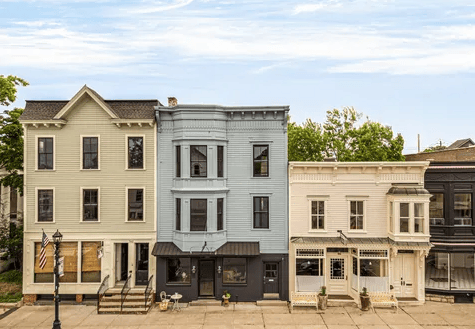
Catskill offers a housing mix that fits many entry-level and move-up investors. Village planning documents describe older neighborhoods near downtown, suburban-style subdivisions, garden apartments, row houses, above-the-store units, and townhouse-style development along Catskill Creek. That variety can give you more than one path into the market.
A lot of the housing stock dates to the mid-19th and early 20th century. That can be a plus if you know how to evaluate older buildings and budget for systems, maintenance, and code-related updates. In markets like this, value is often created through smart rehab and steady management rather than flashy finishes alone.
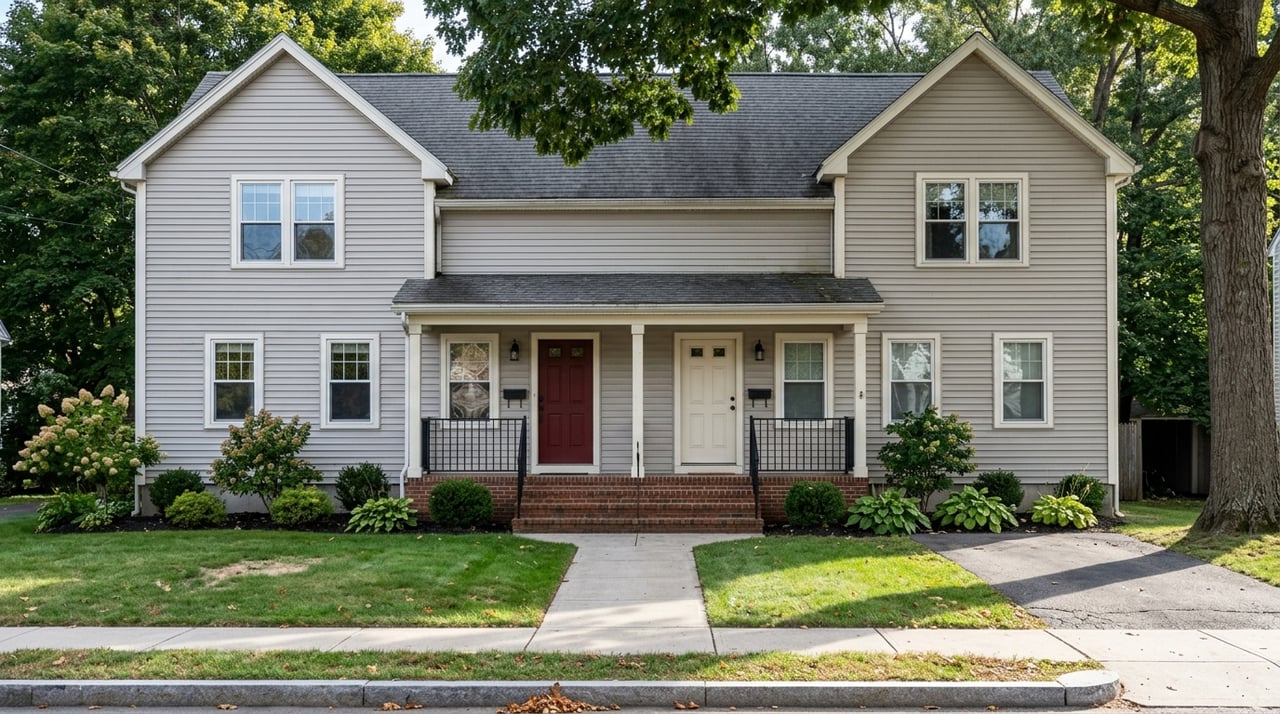
The village’s housing mix also supports the case for small multifamily investing. Using 2017 ACS data, the village plan reported 48.7% detached single-family, 13.4% two-family, 25.7% 3- to 4-unit buildings, 6.2% 5- to 9-unit buildings, and 5.1% 10+ unit buildings. Notably, it also recorded a 74.3% increase in 3- to 4-unit apartment buildings from 2010 to 2017.
That increase is a strong signal that small multifamily is part of Catskill’s local housing story. If your strategy centers on duplexes, triplexes, or four-unit buildings, that is worth paying attention to. It suggests the market is not limited to single-family rentals alone.
Current rental inventory and rent ranges
Live rental listings help show what the market looks like right now. A recent Apartments.com snapshot showed 22 rentals available in Catskill. That is not a huge inventory pool, which is one reason local, property-specific analysis matters.
The same source reported average rents as of May 2026 at $768 for a studio, $1,075 for a one-bedroom, and $993 for a two-bedroom. It also noted apartment rents were up 1.2% over the prior year. Those numbers suggest a market with modest rent levels, especially compared with larger or more expensive nearby markets.
Active listings painted a slightly wider range. Advertised one-bedroom units ran from about $1,150 to $2,200, while two-bedroom units ranged from about $1,250 to $1,695. Larger apartments and houses reached $2,850 or more.
For a small investor, the key takeaway is simple: Catskill looks more like a steady-income market than a luxury rent-growth play. You may still find upside, but it will likely come from buying well, improving intelligently, and managing consistently. That is a different strategy than banking on major rent jumps alone.
What drives tenant demand
Catskill appears to be a driving market. Apartments.com notes that residents typically rely on driving for daily needs and that there are very few transit options. That means features like parking and easy access can have an outsized effect on tenant appeal.
For first-time investors, this is easy to underestimate. A unit that looks good on paper may lease more slowly if parking is awkward or limited. In Catskill, convenience can matter just as much as finishes.
Current rental search patterns also point to practical features that renters notice. Search filters prominently surface pet-friendly units, utilities included, furnished options, washer and dryer access, and air-conditioning. If you are planning upgrades, these are the kinds of amenities worth weighing against your budget and expected rent ceiling.
How to think about vacancy
Vacancy in Catskill needs context. The Village plan reported a 29.1% village vacancy rate in 2017, but it also noted increasing second-home ownership and the presence of seasonal units. In other words, not every vacant property should be treated as a traditional long-term rental vacancy.
That distinction matters when you underwrite risk. A headline vacancy number can make a market look softer than it really is if a meaningful share of that inventory is seasonal or not intended for year-round rental use. You will want to study the specific property, block, and use pattern rather than relying on one broad figure.
Best value-add plays in Catskill
In Catskill, the most realistic value-add opportunities tend to be practical. The Village plan specifically cited rehabilitation needs such as roofs, siding, and heating systems. For many small investors, these are the improvements that protect the asset and support stable occupancy.
Interior updates can matter too, especially when they improve livability rather than just appearance. Kitchens, baths, paint, and flooring often make sense when paired with system upgrades. Laundry access and air-conditioning may also help a property compete better, depending on the unit and layout.
The big idea here is that Catskill often rewards disciplined improvement plans. A property with solid bones but deferred maintenance may offer a better path than a heavily priced, fully polished asset with limited room for upside. In a modest-rent market, every dollar of rehab should have a clear purpose.
Issues first-time investors should watch
Catskill’s planning documents flag a few operational issues that deserve attention. When single-family homes are converted into more units, common problems can include overcrowding, insufficient parking, solid waste disposal issues, and general property maintenance concerns. These are not small details. They can directly affect costs, tenant satisfaction, and compliance.
The Village plan also supported ideas like converting vacant upper-story space to residential use and exploring accessory dwelling units. Still, those possibilities depend on current zoning and permits. Before you assume an added unit or altered use will work, confirm what is allowed now.
This is where local expertise matters. A property that looks like a value-add opportunity online may require a much deeper review once parking, layout, code, or permit history comes into focus. A careful pre-purchase review can save you from buying a problem instead of an opportunity.
Key legal items to check
A few New York rules should be on your underwriting checklist if you are considering a Catskill rental property. According to the New York Attorney General, Catskill is one of the localities covered by the Good Cause Eviction Law, which generally requires good cause for eviction or nonrenewal on covered units. That can affect how you evaluate lease strategy and long-term operations.
Statewide rules also matter. Security deposits are capped at one month’s rent, late fees are capped at $50 or 5% of monthly rent, and source-of-income discrimination is prohibited. These are basic compliance items, but they should still be part of your investment review from day one.
If you are considering a short-term rental angle, be especially cautious. The Village of Catskill says it is currently reviewing short-term rental permits and warns that operating without a current permit or renewal can trigger penalties. That means short-term rental income should never be assumed without confirming the current local process.
Is Catskill right for your strategy?
Catskill can make sense if you are looking for an older, smaller-scale asset with manageable entry pricing and room for operational improvement. The market appears to favor duplexes, small multifamily buildings, mixed-use residential formats, and older homes that benefit from thoughtful updates. It is less about chasing luxury rents and more about building a stable income property.
If that sounds like your style, Catskill may be a market worth watching closely. The best opportunities will usually come from disciplined underwriting, realistic rehab planning, and a clear understanding of local rules. That is especially true in a market where parking, maintenance, and building condition can shape returns as much as rent does.
If you are exploring investment opportunities in Catskill or the broader Capital Region, Team Taylor can help you evaluate properties with a local, investor-minded lens and guide you through your next move.
FAQs
What makes Catskill appealing for small rental property investors?
- Catskill offers lower entry pricing than several nearby Hudson Valley markets, a meaningful mix of small multifamily housing, and value-add potential through practical rehab and better management.
What kinds of rental properties are common in Catskill, NY?
- Common property types include detached single-family homes, two-family homes, 3- to 4-unit buildings, garden apartments, row houses, above-the-store apartments, and some townhouse-style development.
What are current rent ranges for Catskill rental properties?
- Recent data showed average rents of $768 for studios, $1,075 for one-bedrooms, and $993 for two-bedrooms, while active listings ranged higher in some cases depending on unit type, size, and condition.
Is Catskill a good market for value-add investing?
- Catskill can fit a value-add strategy, especially for older properties that need work on roofs, siding, heating systems, kitchens, baths, flooring, laundry, or air-conditioning.
What legal rules should Catskill landlords review before buying?
- Investors should review Good Cause Eviction coverage, statewide rules on security deposits and late fees, source-of-income protections, and any current village permit requirements if a short-term rental use is being considered.
Why does parking matter for Catskill rental properties?
- Catskill is largely a driving market with few transit options, so parking and ease of access can affect tenant demand, lease-up speed, and overall property appeal.