Wondering whether Amsterdam, NY is a smart place to buy, invest, or put down roots? If you are looking for a market with lower entry prices than many nearby Capital Region areas, Amsterdam deserves a serious look. The key is knowing what it offers, where the opportunities are, and where extra homework matters. Let’s dive in.
Amsterdam offers value first
If your top priority is affordability, Amsterdam stands out. Census data shows a median owner-occupied home value of $137,900, and Realtor.com reported a median listing price of $275,000 in March 2026. That places Amsterdam within reach for many buyers who feel priced out of more expensive nearby markets.
It is also relatively competitive in a practical, everyday way. Homes sold about 1.16% below asking price on average in February 2026, which suggests you may still have some room to negotiate depending on the property. At the same time, there were 87 homes for sale, giving buyers a meaningful number of options to explore.
Compared with nearby cities, Amsterdam sits in an interesting middle ground. Its median listing price is close to Albany, below Schenectady, and far below Saratoga Springs. If you want Capital Region access without Saratoga-level pricing, Amsterdam can make a lot of sense.
Amsterdam can work for buyers
For many homebuyers, Amsterdam is a fit because it offers a smaller-city setting with lower carrying costs. The city has 18,219 residents, a 53.0% owner-occupied housing rate, and 7,607 households, which points to a market with both homeowners and renters rather than a one-note investor landscape. That balance can appeal if you want a place that feels lived in and established.
The commute picture is another plus. Census QuickFacts lists a mean commute time of 20.7 minutes, and city materials note access from NYS Thruway Exit 27 as well as Routes 5, 5S, 30, and 67. Amsterdam also has an Amtrak station on the west end of the city, which adds another layer of regional access.
If you work in or travel regularly to Albany or Schenectady, Amsterdam can function as a regional home base. Planning materials also describe route access toward Fulton and Saratoga Counties. That means you may be able to trade some polish or convenience in one area for lower monthly costs overall.
Amsterdam can work for investors too
Amsterdam is not only a market for owner-occupants. It also has real potential for small-scale investors, especially those interested in duplexes, small multi-family properties, or value-add opportunities. The city zoning code explicitly anticipates single-family, duplex, and multi-family development, which is an important signal for anyone exploring investment property options.
That matters because the local housing mix is broader than many people expect. City planning and redevelopment materials describe older residential blocks, underused two-family properties, mixed residential and commercial spaces, and opportunities for infill or redevelopment. In plain terms, Amsterdam is a market where small multi-family can be part of the normal housing conversation.
The rental side also supports investor interest. Realtor.com reported 33 rentals and a median rent of $1,300 in March 2026. That is lower than nearby Albany, Schenectady, and Saratoga Springs, but it still points to active renter demand in a city with a sizable non-owner-occupied segment.
Housing stock is varied
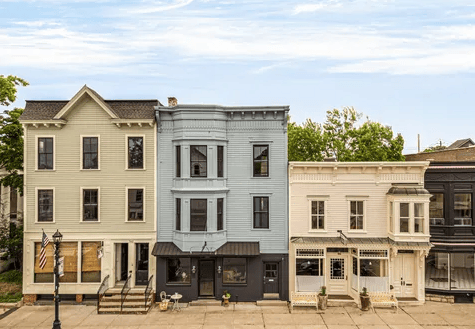
One of Amsterdam’s biggest strengths is variety. You are not just looking at one type of home or one type of buyer. The city includes single-family homes, duplexes, multi-family properties, mixed-use areas, and older building stock that may appeal to buyers looking for character or investors looking for upside.
That variety can create opportunity, but it also means you need to look carefully at each property. Some homes may be more turnkey, while others may need updates, repairs, or a stronger renovation plan. This is not a market where every listing should be judged by the same checklist.
In redevelopment areas, that point becomes even more important. West End planning materials reference vacant parcels, former industrial land, and brownfield-related concerns in some parts of the city. If you are considering a property with a more complex history, due diligence is essential.
Neighborhood feel is block by block
Amsterdam has a compact feel rather than a sprawling suburban one. The city’s Downtown Revitalization Initiative highlights a walkable core, mixed residential and commercial spaces, and public-space improvements. That can be appealing if you want easier access to local businesses, services, and a more connected street layout.
At the same time, the experience can vary from one block to the next. West End planning documents describe a walkable grid system, but they also note uneven sidewalk quality and pedestrian gaps in some places. In other words, Amsterdam is best understood at the street level, not just by citywide averages.
That is why local guidance matters. Two homes with similar prices can offer very different day-to-day experiences based on condition, location, nearby uses, and the surrounding block. If you are buying in Amsterdam, it helps to evaluate the property and the immediate area together.
How Amsterdam compares nearby
If you are choosing between Amsterdam and other Capital Region markets, pricing is one of the clearest differences.
| Market | Median Listing Price | Median Price per Sq. Ft. | Median Rent |
|---|---|---|---|
| Amsterdam | $275,000 | $139 | $1,300 |
| Albany | $277,450 | $203 | $1,600 |
| Schenectady | $292,400 | $188 | $1,500 |
| Saratoga Springs | $829,450 | $440 | $2,697 |
Amsterdam is not dramatically cheaper than Albany on listing price alone, but the price per square foot and rent levels tell a more complete story. It also remains far more affordable than Saratoga Springs. For buyers and investors who care about entry cost, that difference can be meaningful.
Who Amsterdam fits best
Amsterdam may be the right market for you if you want:
- Lower entry pricing than many nearby Capital Region options
- A smaller-city setting with regional commute access
- Single-family, duplex, or small multi-family opportunities
- A market where rehab or value-add strategies may be realistic
- More focus on budget and upside than polished suburban branding
It may be a tougher fit if you want:
- A highly uniform, turnkey housing stock
- A market where every block feels the same
- Newer suburban-style development patterns
- Minimal due diligence on condition, site history, or neighborhood variation
The biggest takeaway is simple. Amsterdam can be a smart value play, but it is not a plug-and-play market in every case. Buyers and investors usually do best here when they look closely, compare options carefully, and think in terms of long-term fit rather than just headline price.
What to watch before you buy
Before you make a move in Amsterdam, pay attention to a few practical factors. First, compare the asking price to the property’s condition and the surrounding block, not just to citywide averages. A lower price can be a great opportunity, but only if the numbers still work after repairs, updates, or carrying costs.
Second, be realistic about housing age and maintenance. Amsterdam’s older housing stock can offer character and flexibility, but it may also come with deferred upkeep. If you are buying a duplex, small multi-family, or redevelopment-minded property, extra inspection and review can help you avoid surprises.
Third, think about your actual lifestyle. If your goal is affordability with decent regional access, Amsterdam may check the right boxes. If you want a more polished, more uniform feel from the start, you may need to weigh whether a different market better matches your priorities.
The bottom line on Amsterdam
Amsterdam, NY is usually the right market for buyers or investors who want affordability, flexibility, and access to the broader Capital Region without paying a premium for a higher-profile address. It offers a balanced housing base, a mix of property types, and real potential for small multi-family or rehab-minded purchases. But it is also a market where block-by-block research matters.
If you want help weighing Amsterdam against Albany, Schenectady, Saratoga-area options, or other 518 markets, talking with a local team can save you time and help you make a more confident choice. For guidance on buying, selling, relocating, or investing in the Capital Region, connect with Team Taylor.
FAQs
Is Amsterdam, NY affordable compared with nearby markets?
- Yes. Based on the research provided, Amsterdam is priced close to Albany, below Schenectady, and far below Saratoga Springs, with lower median rent and lower price per square foot.
Is Amsterdam, NY good for first-time homebuyers?
- Amsterdam can be a strong option for first-time buyers who want lower entry costs, a smaller-city setting, and access to the broader Capital Region.
Is Amsterdam, NY a good place to buy an investment property?
- It can be, especially if you are open to duplexes, small multi-family properties, or value-add opportunities and are prepared to do careful property-level due diligence.
What types of homes are common in Amsterdam, NY?
- The city includes single-family homes, duplexes, multi-family properties, mixed-use spaces, and older housing stock that may offer rehab or conversion potential.
Does Amsterdam, NY work for commuters?
- Yes. City and census information point to access via the Thruway, several major routes, CDTA regional connections, and an Amtrak station, along with a mean commute time of 20.7 minutes.