Thinking about buying in Hudson and wondering which home style actually fits your life? In a city this compact, your choice is not just about looks. It also shapes how you live day to day, how much space you have, and what updates may require local approval. This guide breaks down Hudson’s rowhouses, loft-style spaces, and nearby farmhouses so you can compare them with more confidence. Let’s dive in.
Why Hudson’s Home Styles Stand Out
Hudson packs a lot of architectural variety into just 2.16 square miles. With a 2025 population estimate of 5,721, it is a small city with a compact, walkable core, rail access, and strong ties to the surrounding agricultural district.
That mix helps explain why you can find attached historic rowhouses, industrial-style loft spaces, and farmhouse properties within Hudson’s orbit. Early Dutch farmhouses, Federal-style buildings, and later industrial structures all help shape the local housing story.
Why Preservation Matters in Hudson
In Hudson, style and regulations often go hand in hand. If a property is in a designated historic district, exterior alterations, additions, demolition, new construction, and window changes require a certificate of appropriateness before a building permit is issued.
For many buyers, that matters as much as square footage or layout. Interior spaces are generally not reviewed unless they are specifically landmarked, but exterior design decisions can come with an added approval step.
Rowhouses in Hudson
What Hudson rowhouses look like
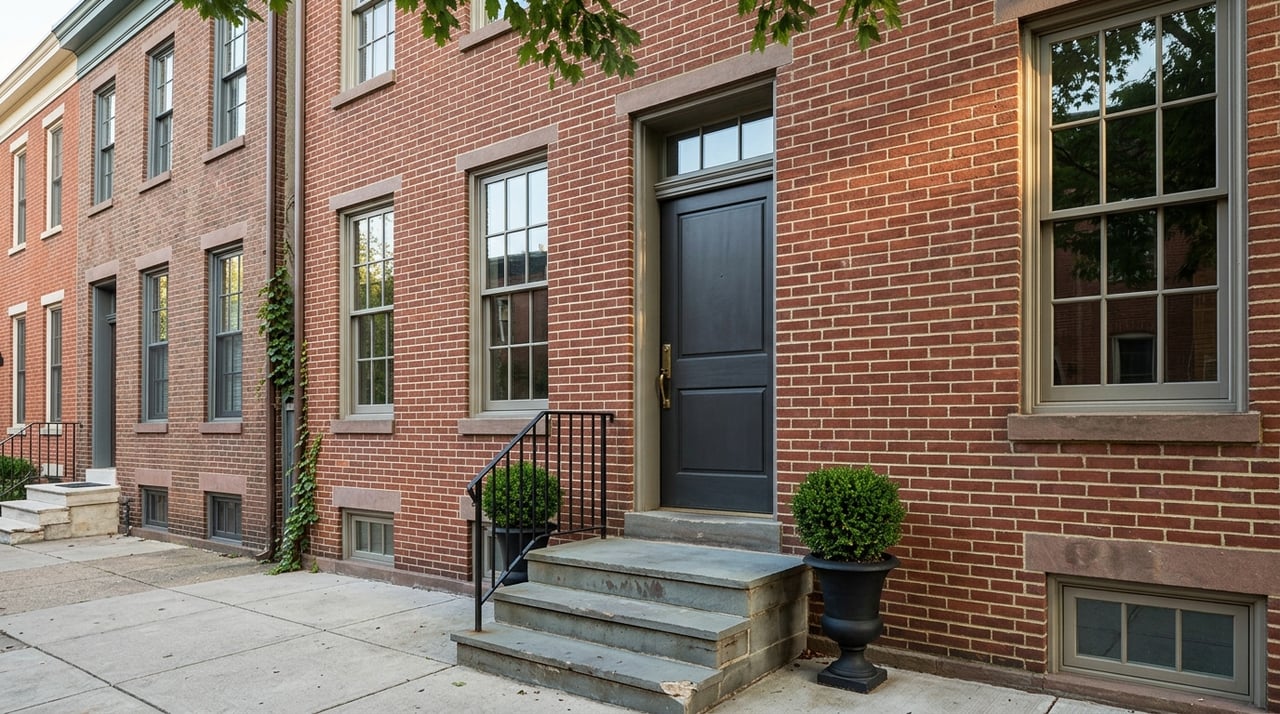
Hudson’s rowhouse character is strongest in the downtown grid. Historic documentation points to Federal-period rowhouses on Union and Warren Streets, a prominent brick row facing Washington Square, and later 19th- and early 20th-century rowhouses mixed among older brick and frame homes.
This pattern gives parts of the city a strong street-wall feel. West of Third Street, many homes are smaller brick or frame dwellings or rows, which helps explain why rowhouses feel so woven into Hudson’s urban layout.
How a rowhouse usually lives
A rowhouse is an attached home that shares one or both side walls with neighboring homes. In historic examples, the layout often includes a side hall, a front living room or double parlor, a dining room behind it, a kitchen at the rear or basement level, and bedrooms upstairs.
That layout tends to feel compact but organized. You get a clear separation between public rooms and private rooms, which many buyers still find appealing.
What ownership may involve
With older rowhouses, the details matter. Character-defining features often include masonry walls, windows, floors, stair halls, and the front rooms.
Maintenance commonly centers on masonry repair, mortar repointing, and preserving historic wood windows. In Hudson, exterior changes may also require local review before work begins, so it helps to understand both the home and the process before you buy.
Who rowhouses fit best
Rowhouses often appeal to buyers who want in-town living and a more street-oriented lifestyle. If you value walkability, original façade character, and a traditional room-by-room layout more than a large yard, this style may feel like a natural fit.
In Hudson, that usually means close ties to the downtown core and the Warren Street area. For many buyers, the draw is the chance to live right in the fabric of the city.
Lofts in Hudson
Why loft living makes sense here
Hudson’s industrial history is part of its housing identity. Historic and local tourism materials describe the city as a thriving industrial hub, with railroad and waterfront development shaping areas around the waterfront and South Bay.
That history helps explain why loft-style living feels believable in Hudson. Even when a property is not a textbook loft conversion, the city’s industrial past supports the open, adaptive-reuse character buyers often look for.
What a loft usually feels like
Industrial and warehouse buildings are typically defined by large open areas, exposed ceilings, structural posts or columns, perimeter walls, and broad floor plates. In a loft-style setting, that often translates into open volume, visible structure, and stronger natural light.
Instead of a series of smaller rooms, the focus is usually on flexibility. You may have more freedom to define living, working, or entertaining areas within one larger space.
A Hudson example of adaptive reuse
One helpful local reference is the Pocketbook project. City IDA materials describe Pocketbook Hudson as a historic textile mill reimagined as a mixed-use complex, including a top-floor space with 25-foot ceilings, column-free space, and strong light.
It is not a standard residential loft building in the narrow sense, but it shows the kind of industrial shell that supports the loft look and feel in Hudson. For buyers trying to picture the local version of loft character, that example is useful.
What ownership may involve
Loft-style properties often put the spotlight on windows, masonry, and building systems. Preservation guidance notes that historic windows can often be repaired and upgraded rather than replaced, and masonry repointing should use compatible methods and materials.
In practical terms, loft ownership often means balancing the dramatic shell with everyday needs. Climate control, storage, and room definition can take more planning when you want to preserve the openness that makes the space appealing in the first place.
Who lofts fit best
Lofts often suit buyers who want open space, taller ceilings, and a home with flexibility. If you like a less formal layout and want a space that can support creative work, entertaining, or a studio-like feel, loft living may be worth a closer look.
This style is usually less about traditional room boundaries and more about volume, light, and adaptability. For the right buyer, that tradeoff is the whole point.
Farmhouses Near Hudson
What farmhouse means in this area
In the Hudson area, farmhouse properties are usually tied more closely to the broader Columbia County landscape than to the compact downtown grid. Regional architectural sources describe the Hudson River Valley as home to modest farmhouses and rural dwellings, with Dutch farmhouses often low and rectangular and British farmhouses often taller, narrower, and side-entry in form.
That means there is no single farmhouse template. What connects them is a relationship to land, older domestic building traditions, and a setting that usually feels more rural or edge-of-town.
How farmhouse living differs
A farmhouse property often changes your daily rhythm. Instead of stepping into a dense street grid, you are more likely to experience a stronger connection to open land, landscape, and privacy.
For many buyers, that is the main appeal. The home is not just a structure, but part of a larger setting.
What ownership may involve
Older farmhouses often require the same careful approach as other historic homes. That can include wood window repair, masonry repointing where applicable, and thoughtful planning for exterior updates.
If the property is in a designated historic district, Hudson’s local review rules may also come into play for exterior work. As with rowhouses and loft conversions, maintenance and repair are often favored over wholesale replacement of historic materials.
Who farmhouses fit best
Farmhouses usually appeal to buyers who want more separation from downtown and a home that feels rooted in the landscape. If you are drawn to a rural pace, a detached home, and a stronger sense of space around you, this style may be the best match.
In Hudson’s orbit, that often means expanding your search beyond the city itself and into the surrounding Columbia County countryside.
How To Compare These Styles
If you are deciding between Hudson rowhouses, lofts, and farmhouses, start with how you want to live every day. The right choice usually becomes clearer when you focus on setting, layout, and upkeep.
Here is a simple side-by-side view:
| Style | Typical Setting | Layout Feel | Key Appeal | Common Consideration |
|---|---|---|---|---|
| Rowhouse | Downtown grid | Structured, room-by-room | Walkability and historic street presence | Exterior preservation review and masonry/window upkeep |
| Loft | Industrial or adaptive-reuse setting | Open and flexible | Volume, light, and visible structure | Systems planning, storage, and preserving openness |
| Farmhouse | Rural or edge-of-town | Detached and landscape-oriented | Space, setting, and traditional rural character | Ongoing maintenance and possible historic-district rules |
Choosing The Right Hudson Home Style
If you want to be near the center of activity, a rowhouse may give you the strongest connection to Hudson’s street life and historic core. If you want openness and architectural drama, a loft-style property may offer the flexibility you need.
If your priority is land, breathing room, and a setting that feels tied to the countryside, a farmhouse may be the better fit. In Hudson, each style tells a different story, and the best one is the one that matches your pace, priorities, and plans for the property.
Whether you are relocating, buying your first place in the area, or comparing investment-minded options with owner-occupied homes, a local guide can help you weigh style, setting, and the practical details that come with each one. If you want help exploring Hudson and the surrounding market, connect with Team Taylor for expert guidance.
FAQs
What is the most common historic home style in downtown Hudson, NY?
- In Hudson’s downtown grid, rowhouses are a major part of the historic housing pattern, especially around streets like Union and Warren.
Are lofts common in Hudson, NY?
- Loft-style spaces make sense in Hudson because of the city’s industrial and waterfront history, even if not every property is a classic residential loft conversion.
Do historic homes in Hudson require approval for exterior changes?
- Yes, in designated historic districts, exterior alterations, additions, demolition, new construction, and window changes require a certificate of appropriateness before a building permit is issued.
What does farmhouse living near Hudson usually mean?
- Farmhouse living near Hudson usually means a more rural or edge-of-town setting with a stronger connection to land and landscape than you get in the city center.
How do I choose between a rowhouse, loft, and farmhouse in Hudson?
- Start by comparing your preferred setting, layout style, maintenance comfort level, and whether you want walkability, open space, or a rural property feel.