Gardening for Beginners: How to Grow Your Green Thumb This Spring
Starting a garden often feels much more intimidating than it actually is. Many beginners make the same mistake: they assume they need a sprawling backyard, expensive power tools, or a PhD in botany to see results. The truth is much simpler. A successful garden doesn’t require perfection—it requires a simple plan, a few healthy plants, and a bit of consistency.
Whether you have a massive sunny lawn or a small apartment balcony, gardening is one of the most rewarding hobbies you can start this season. Beyond the fresh food, it’s a proven way to lower stress, beautify your home, and even add a bit of "curb appeal" to your outdoor living spaces. Here is your "no-fail" guide to getting started.
1. Location, Location, Location
In real estate and in gardening, location is everything. Most vegetables, herbs, and flowers crave at least six to eight hours of direct sunlight every day. Before you buy a single bag of soil, spend a weekend tracking the sun across your yard, porch, or patio.
If you don’t have much space, don’t let that stop you. Containers, raised beds, and vertical planters all work beautifully. In fact, many beginners find smaller spaces easier to manage because they require less weeding and are easier to keep an eye on.
2. Don’t Treat Your Soil Like Dirt
Healthy plants start underground. If you are planting directly into the ground, take the time to loosen the dirt and mix in high-quality compost or garden soil. This provides the nutrients your plants need to build strong root systems.
A quick warning for pot-gardeners: Never use "dirt" from your yard in a container. It is too heavy, gets compacted easily, and drains poorly, which can essentially "suffocate" your plants. Always invest in a dedicated potting mix for containers to ensure proper drainage and aeration.
3. Stick to the "Easy Wins"
This is where many people overcomplicate things. For your first season, choose plants that are known to be hardy and productive. A garden with five thriving plants is much more rewarding than a garden with twenty struggling ones.
-
Vegetables: Lettuce, cherry tomatoes, zucchini, and green beans are notoriously "forgiving."
-
Herbs: Basil, mint, parsley, and chives grow like weeds and are a chef's best friend.
-
Flowers: For instant color, try sunflowers, marigolds, and zinnias.
4. Master the "Deep Soak"
Watering is a science, but it isn’t rocket science. Too little water dries plants out, but too much water can actually drown the roots. The goal is steady moisture, not soaked soil.
Most gardens do better with a deep watering two or three times a week rather than a quick, shallow sprinkle every day. Try to water in the early morning. This allows the water to soak deep into the roots before the sun gets too hot, and it gives the leaves time to dry off. Wet leaves sitting overnight are a magnet for mold and disease.
5. Give Them Some Breathing Room
It’s tempting to crowd your plants together to make the garden look "full" immediately, but plants need airflow to stay healthy. When air can't move between leaves, moisture gets trapped, leading to pests and disease. Read the plant tag or seed packet and follow the spacing directions closely. It may look sparse at first, but those plants will grow faster than you think!
6. The "Five-Minute" Rule
You don’t need to spend hours in the dirt to be a "real" gardener. Spend just five minutes each morning walking through your garden with a cup of coffee. Check the leaves for yellowing or holes, and stick your finger an inch into the soil to see if it’s dry. Catching a small problem today—like a few hungry bugs—prevents a total garden disaster next week.
The Golden Rule: Embrace the Imperfection
Here’s the secret every "master gardener" knows: Every gardener kills plants. Some bugs will win, and sometimes the weather will wreck your plans. Gardening isn’t about being perfect; it’s about learning as you go. Start small, stay consistent, and don’t try to be too fancy. That is exactly how beginners become experts.
Happy planting!
Bonus:
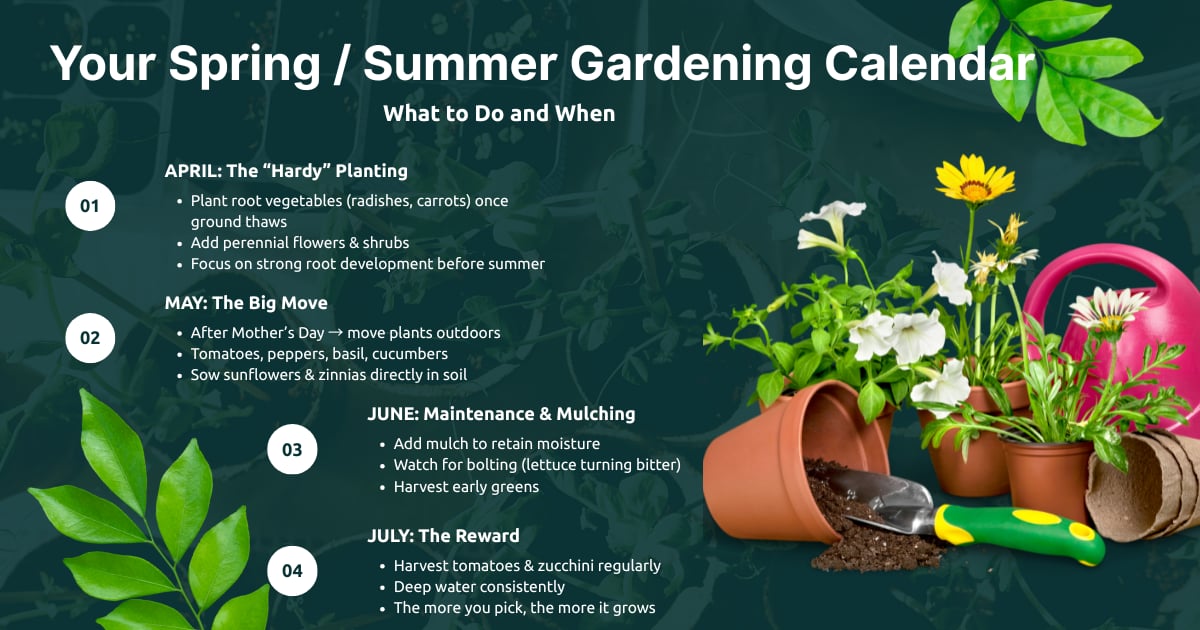
Your Spring / Summer Gardening Calendar: What to Do and When
To help you stay on track, we’ve put together this quick timeline for the upcoming season. Clip this out or save it to your phone!
-
April: The "Hardy" Planting Once the ground isn't frozen, you can plant root vegetables like radishes and carrots. It’s also a great time to get your perennial flowers and shrubs in the ground so they can establish roots before the summer heat.
-
May: The Big Move In most areas, Mother’s Day is the "safe zone" for heat-loving plants. Move your tomatoes, peppers, basil, and cucumbers outside. This is also the time to sow sunflower and zinnia seeds directly into the dirt.
-
June: Maintenance & Mulching As the weather heats up, add a layer of mulch around your plants to lock in moisture. Keep an eye out for "bolting" (when lettuce grows tall and bitter) and harvest your early greens to make room for summer crops.
-
July: The Reward Enjoy the fruits of your labor! Keep up with your deep watering schedule, and harvest your tomatoes and zucchini regularly—the more you pick, the more the plant will produce.